The short answer is that it depends entirely on the material, and a few common takeout containers are genuinely unsafe to put in a microwave. A polypropylene deli tub reheats your leftovers without complaint; a foam clamshell can soften and shed chemicals into your food; the wire handle on a Chinese takeout box can start a fire in a couple of minutes. Because the container rarely tells you plainly which it is, here is how to read each type before you press start.
Plastic containers: read the number on the bottom
Every plastic container carries a resin identification code, the number from 1 to 7 inside the little triangle on the base, and for microwaving it tells you most of what you need to know. Code 5, polypropylene (PP), is the microwave-safe workhorse of foodservice. It is heat-resistant to roughly 250°F, BPA-free, and the standard material for reusable-style takeout tubs and their lids. A mineral-filled version, MFPP, pushes heat resistance further and is typically rated for reheating in bursts under two minutes.
The ones to avoid are easy to remember. Code 1 (PET), the clear, thin, glossy plastic used for cold deli and salad containers, is single-use and not made for reheating; it can warp and is not intended to hold hot food. Code 3 (PVC) can release unwanted chemicals under heat. Code 6, polystyrene, which includes foam clamshells and rigid clear cutlery-style plastic, should never be microwaved. Look for the microwave-safe symbol, usually three wavy lines and sometimes a small dish icon, or the words printed on the base. Keep in mind that this mark is assigned by the manufacturer rather than independently certified, so it is a claim of suitability, not a guarantee for indefinite heating.
Paper and kraft boxes: the lining decides
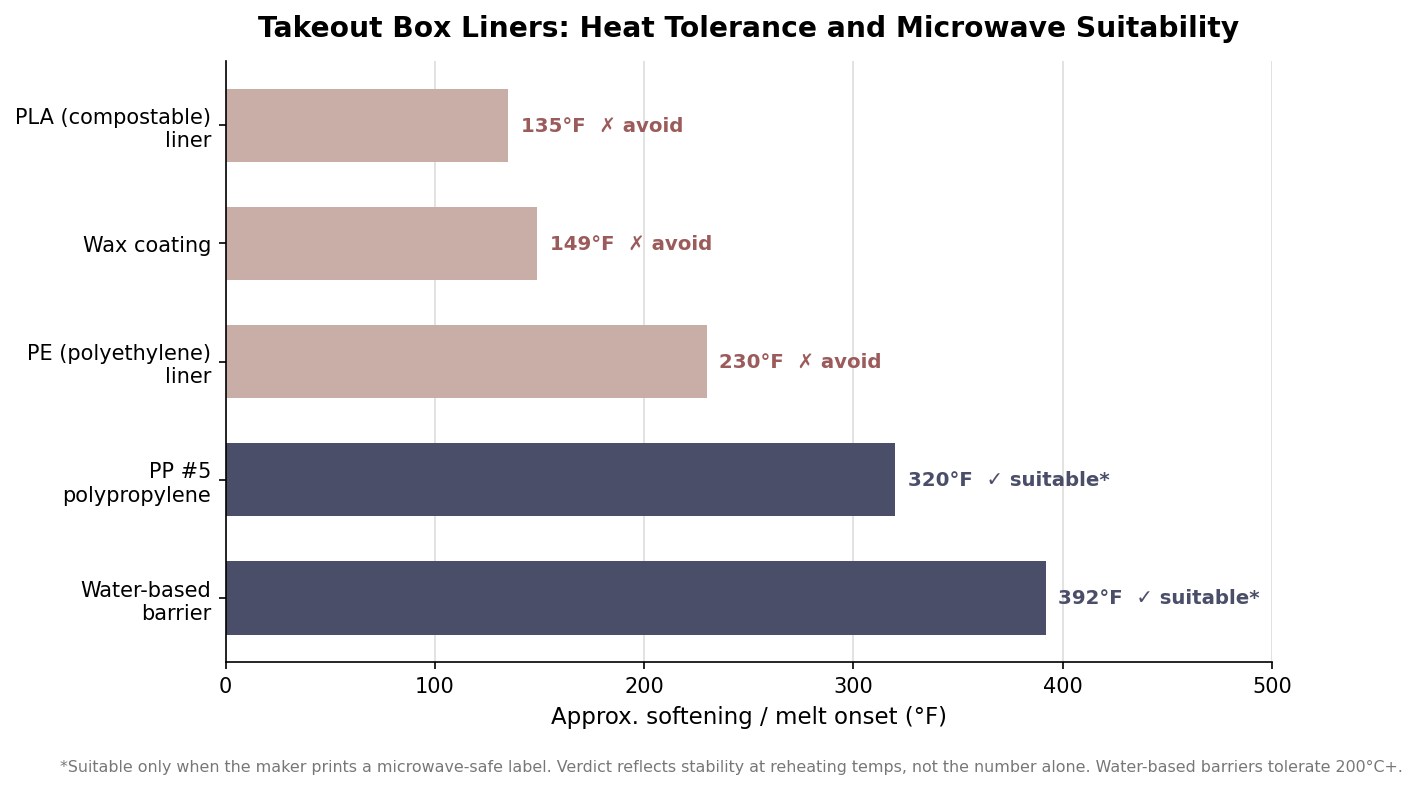
A plain paperboard box looks harmless, but almost none are bare paper. Nearly all have a thin barrier coating on the inside to hold grease and moisture, and that coating, not the paper, sets the heat limit. The differences are large. A PLA (plant-based, compostable) lining deforms at just 131 to 140°F, well below the temperature of reheated food, which is exactly why “compostable” and “microwave-safe” are not the same thing. A wax coating melts around 140 to 158°F. A polyethylene (PE) lining, the slick plastic feel inside many hot-food boxes, softens at about 221 to 239°F. A polypropylene lining holds up to roughly 320°F, and a newer water-based barrier coating can tolerate 200°C and above, which is why those two are the ones actually suited to reheating when the box is labeled for it.
Bare uncoated paper can scorch or ignite if it runs dry and overheats, so even a lining-free box is not a license to run the microwave for several minutes. Match the box to the job: if you expect food to be reheated in the container, it needs a PP or water-based barrier and a clear label, not a wax or PLA liner.
Foam, foil, and the classic Chinese takeout box
Three containers deserve their own warning. Foam (expanded polystyrene) should stay out of the microwave entirely. It softens and deforms under heat and can release styrene into food, and it is now banned or restricted in a growing number of US states for foodservice use. Aluminum and foil containers are metal, so they can arc and spark against the microwave walls; unless your appliance is specifically documented to allow metal, keep them out.
The folded Chinese takeout box, the oyster pail, is the sneakiest of all because the paperboard body seems microwavable while the thin wire handle is the hazard. Metal handles spark, and dry paper can reach its autoignition point near 451°F, which is why an empty or nearly empty box in a 1,000-watt microwave can catch in as little as two to three minutes. If you must reheat from an oyster pail, remove the metal handle first, or better, tip the food onto a plate. Many of these boxes also have a wax or PE liner that will not survive reheating anyway.
How to reheat safely when the label is missing
When you cannot confirm a container is microwave-safe, the safest move is simple: transfer the food to a glass or ceramic dish and reheat that instead. Glass and stoneware handle microwave heat without leaching or warping and cost nothing but a few seconds. When you do reheat in a labeled container, heat in 30 to 60-second intervals rather than one long run, use about 50 percent power to avoid hot spots, and stop well short of two continuous minutes. Vent or remove the lid so steam does not build up, and take plastic lids off entirely, since many are a thinner, less heat-stable plastic than the base. Fatty and sugary foods get much hotter than the container around them, so those in particular are worth moving to glass.
What this means if you package food for customers
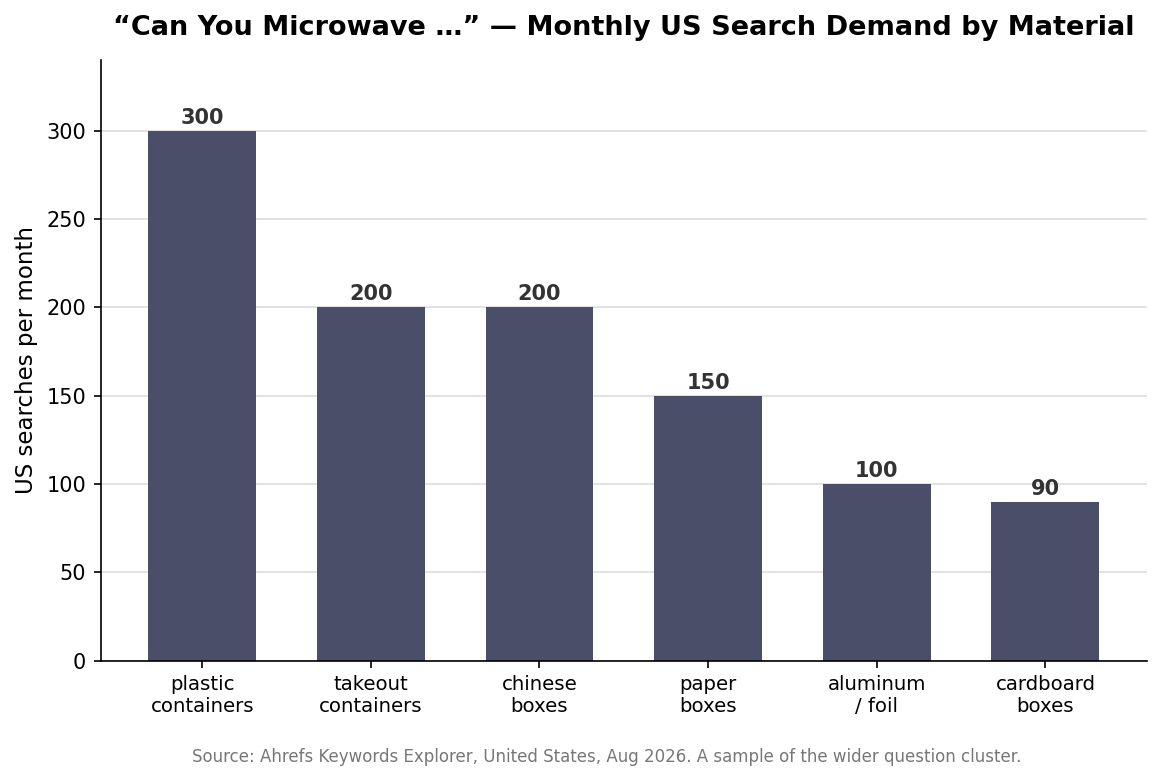
For a restaurant, food truck, or caterer, the practical decision is whether you want customers to be able to reheat straight from the container. If yes, specify code 5 polypropylene tubs or paperboard with a PP or water-based barrier, and print a short “microwave-safe, lid off, 90 seconds” style instruction where diners will see it. If your packaging is foam, PLA-lined, or wax-coated, it is fine for carrying food but should not carry a microwave claim, and it is worth telling customers to transfer before reheating. Getting this right avoids both melted containers and the more serious complaint of chemicals or fire, and it is a genuinely common customer question, as the search demand below shows.
Leave a Reply